
Home insurance plans ranked by how much they exclude
The form family, from the narrowest to the broadest.
Section I property, Section II liability
Read a homeowners insurance policy as a list of what is covered and it will surprise you at the worst possible moment. The grant is wide. The subtractions happen in four separate places, and a claim can end at any one of them.
People look for their loss in a list of covered things, and the list is not where the answer lives. The form grants coverage widely, then takes pieces back out of four separate parts of the document. Ask whether something is covered and you have asked four questions at once. Three can be answered yes while the fourth quietly ends the claim.
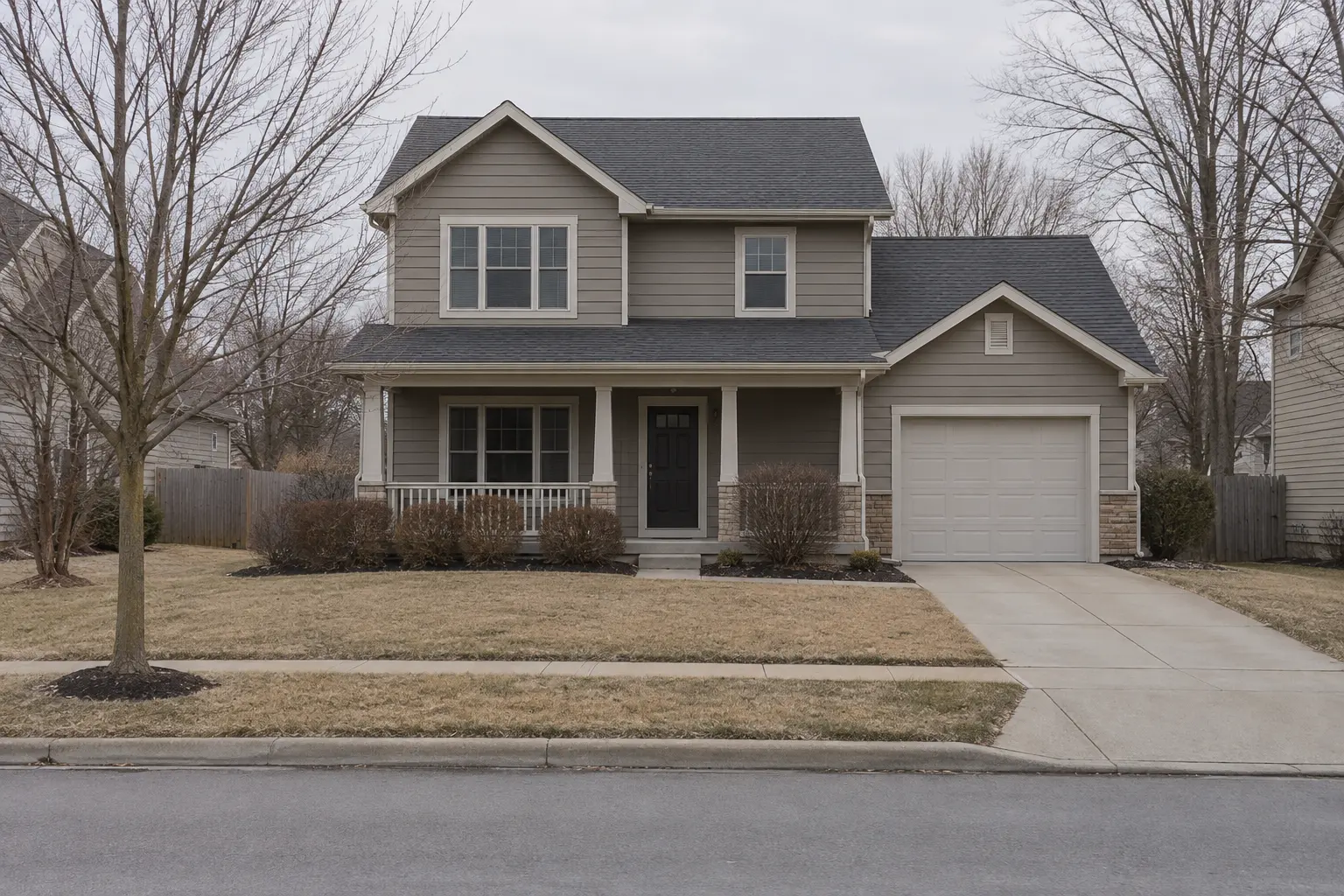
The peril gate decides whether the form responds to the cause. The exclusions remove causes that got through it. The limits set how much money stands behind the coverage. The valuation settles how much is paid.
| Stage | Question | How a claim ends |
|---|---|---|
| Peril gate | Does the form respond to this cause? | Absent from a closed list. Nothing forbids it; nothing admits it. |
| Exclusions | Is the cause named in the exclusions? | Nine in the March 2022 edition, applied even where a covered cause contributed. |
| Limits | How much money stands behind it? | A category cap absorbs it. Theft caps on jewelry and silverware are not on the declarations page. |
| Valuation | New for old, or depreciated? | Paid, then computed at depreciated value. Not a denial; it feels like one. |
Two sections, six letters. Section I is property and runs A through D; Section II is liability and holds E and F. The dwelling limit anchors the rest, which is why an argument about Coverage A is a different kind of argument from any of the others.
| A | DwellingThe house and what is attached to it. The limit should be the cost of rebuilding, which is neither market price nor assessment. |
|---|---|
| B | Other structuresDetached: a garage, a fence, a shed. A tenth of the dwelling limit at most in the May 2011 and March 2022 editions, and an additional amount: a garage and a house lost together draw on two pots. |
| C | Personal propertyEverything unattached. A percentage of the dwelling limit, set by the insurer program rather than by rule. |
| D | Loss of useThree coverages on one limit: the rise in living costs while the house is uninhabitable, lost rent, and civil authority, capped at two weeks in the May 2011 edition. |
| E | Personal liabilityDefense and payment for injury or damage to other people the household is legally responsible for. Chosen outright, not derived from Coverage A. |
| F | Medical payments to othersSmall, no-fault, for someone hurt on the property whether or not anyone was at fault. It does not cover the household itself. |
Regulators publish typical proportions for B, C and D, then warn that policies differ. Take the mechanism, not the number: these are percentages of the dwelling limit, and the declarations page is the authority. Coverage B is the exception, its tenth written into the form itself.
Section II is built the other way round. Coverage E is not a share of anything: it is a limit the buyer names. One state regulator’s premium-comparison assumptions set it level with the house: $310,000 against a $310,000 dwelling limit, B a tenth, C a half at actual cash value, D a fifth, on rates effective 1 December 2022. Those are one department’s assumptions, not a national standard. Coverage F is smaller and differently shaped: a per-person cap on medical bills incurred or established within three years of an accident, paid whoever was at fault, and closed to the household itself. A personal umbrella sits above Coverage E, a separate contract rather than a larger number on this one.
There are two ways to build a peril gate and the standard form uses both, on different halves of one house. A named gate lists the causes of loss: on the list it opens, merely absent and it stays shut, with the burden on the policyholder to point at a line. An open gate inverts that, removing specific things from a grant of direct physical loss, so what you read is the list of what is not covered. Nothing in the words all risk means everything.
In an HO-3, about four in five owner-occupied homeowners exposures countrywide on 2023 data published by the NAIC in July 2026, Coverages A and B are open peril and Coverage C is not. Which side a house lands on is set by the form number: there are home insurance plans from HO-1 to HO-8, and not all are built this way. Personal property runs on a closed list of sixteen causes, the same in the May 2011 and March 2022 editions, from fire and windstorm through theft, falling objects and volcanic eruption. That describes the standard form. Insurers in some states file forms of their own, so the list printed in your policy is the one that governs your claim.
| Named cause | What the same line takes back |
|---|---|
| Fire or lightning | Nothing. The line is four words long and carries no condition of its own. |
| Windstorm or hail | Rain, snow, sleet, sand or dust that reaches property inside the building only once wind or hail has opened a roof or a wall. Watercraft only while inside a fully enclosed building. |
| Explosion | Nothing in its own line. |
| Riot or civil commotion | Nothing in its own line. |
| Aircraft | Nothing removed. The line adds self-propelled missiles and spacecraft. |
| Vehicles | Nothing in the Coverage C line. |
| Smoke | Sudden and accidental only, and never smoke from agricultural smudging or industrial operations. Puffback from a boiler or furnace is named in. |
| Vandalism or malicious mischief | Nothing here. The sixty-day vacancy rule people remember sits on the dwelling side of the form, not in this line. |
| Theft | Out: theft by an insured; theft in or to a dwelling under construction until it is finished and occupied; theft from the part of the premises rented to someone who is not an insured; and off-premises theft of trailers, campers, watercraft or property left at another residence. In: attempted theft, and property gone from a known place where theft is the likely answer. |
| Falling objects | Nothing inside the building unless the roof or an outside wall is damaged first, and never the falling object itself. |
| Weight of ice, snow or sleet | Only weight that damages property contained in a building. |
| Accidental discharge or overflow of water or steam | Out: the system or appliance the water escaped from; anything the freezing line answers for instead; damage on the premises from a discharge that happened off it; and mold, fungus or wet rot unless hidden in walls, ceilings or under floors. A sump, a sump pump, a roof drain, a gutter or a downspout is not a plumbing system here. |
| Sudden and accidental tearing apart, cracking, burning or bulging | Only of a steam or hot water heating system, an air conditioning or sprinkler system, or an appliance for heating water. Freezing is not covered under this one. |
| Freezing | Only where reasonable care was used to keep heat in the building or to shut the supply off and drain the system. A sprinklered building has to keep both the water on and the heat up. Sump and gutter equipment sits outside the line. |
| Sudden and accidental damage from artificially generated electrical current | Nothing for tubes, transistors, electronic components or circuitry that are part of appliances, fixtures, computers or home entertainment units. |
| Volcanic eruption | Not earthquake, and not the land shock waves or tremors that travel with it. |
Structure wide, contents narrow, one policy, one declarations page. Drop a television, let a dog chew a rug, spill something on a sofa: none of those is on the sixteen and none is excluded either. They never reach the gate, while the same event that damages a wall is paid.
The spelling moves around; the product does not. What differs between two households is the form number in the corner of the declarations page and the endorsements listed under it. Read those two lines and the spelling stops mattering.
Four items sit outside the standard form whoever wrote it and whatever was paid. Flood is excluded under standard homeowners and renters policies, and here it is a defined term rather than a loose one: inundation of normally dry land from overflowing inland or tidal waters, rapid runoff of surface water, or mudflow, in eCFR text current as of 1 September 2026. The same clause bundles three more events an owner reads as unrelated — sewer backup, sump discharge, groundwater through a foundation — so a filled basement gets a different answer depending which of the four it was. A burst pipe is none of them.
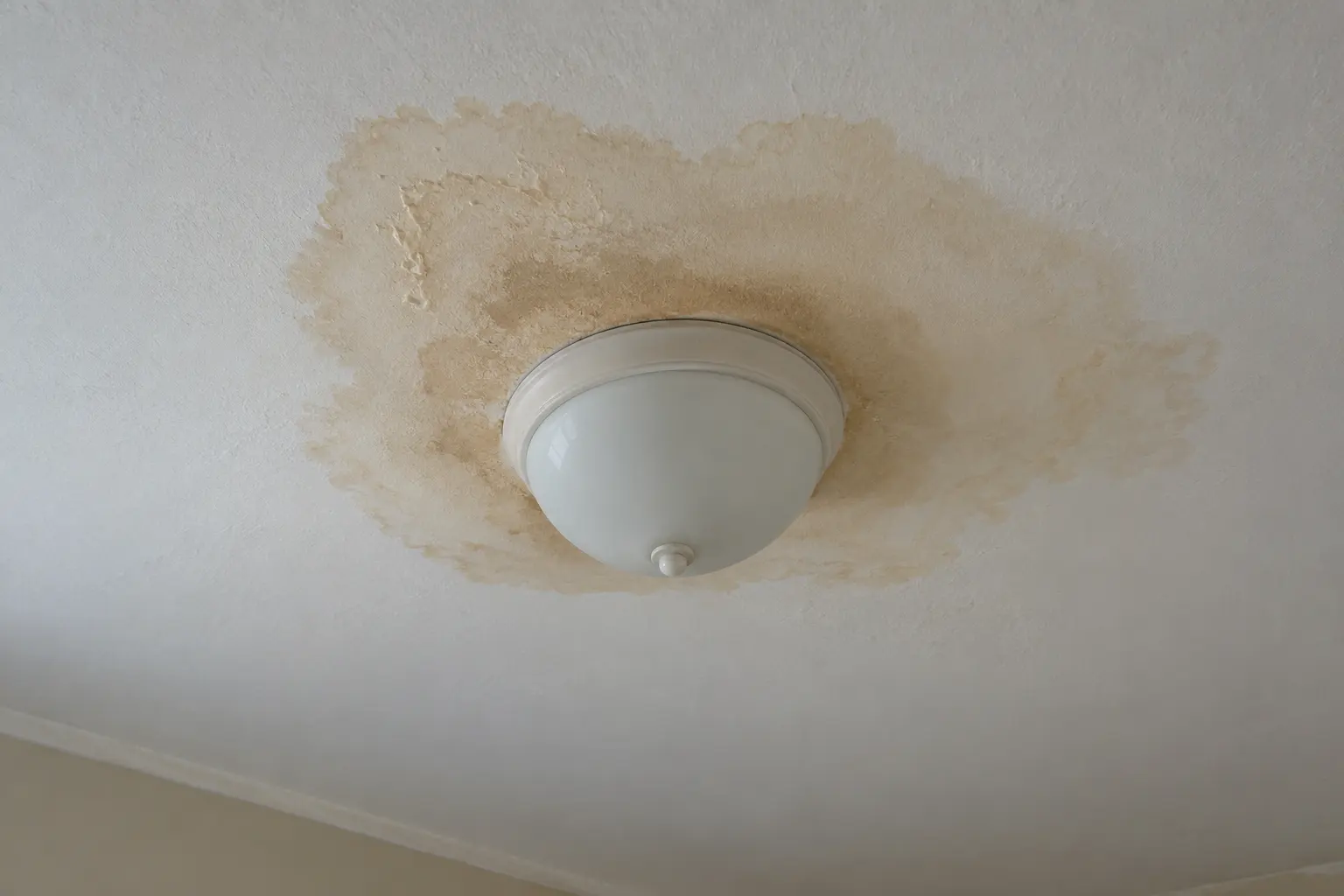
Earth movement is wider than earthquake: landslide, subsidence, sinkhole, any shifting of ground, natural or from a neighbor’s excavation. Cover returns by endorsement or separate policy, and the part to read is the deductible: usually a percentage of dwelling value, not a flat sum. California built its own residual-market mechanism in 1996, the California Earthquake Authority, and even there the cover sat on 14.9 percent of homeowners policies on its insurance department’s 2024 data call.
Neglect is its own exclusion: failing to use reasonable means to save the property at and after a loss. Wear is the premise rather than a loophole, and deterioration, rust, dry rot, mechanical breakdown, latent defect and settling are carved out of the open-peril grant before the exclusions are reached. In the May 2011 and March 2022 editions alike, vandalism drops out after sixty consecutive vacant days. Ordinance or law is stranger: an exclusion and a small additional coverage at once, taken apart below.
The nine are short and famous, and the interesting column is the third: six of them hand something back. The line introducing all nine says the loss is gone wherever an excluded cause sits in the chain, even alongside a covered one.
| Exclusion | What it removes | What comes back |
|---|---|---|
| Ordinance or law | The cost of meeting a building code during repair, and any loss of value a code requirement causes. | A built-in additional coverage returns up to a tenth of the dwelling limit; an endorsement raises that share. |
| Earth movement | Earthquake, landslide, mudflow, subsidence, sinkhole, and any other sinking, rising or shifting, natural or man-made. | Fire, explosion or theft that follows is paid. The movement itself returns only by endorsement or separate policy. |
| Water | Flood, surface water, storm surge, backup through sewers or drains, sump discharge, and groundwater pressing through a foundation. | Fire, explosion or theft that follows is paid. Backup and sump overflow return by endorsement; flood is a separate policy. |
| Power failure | An outage that begins somewhere off the premises. | If that outage causes a loss on the premises from a cause the form does list, the loss is paid. |
| Neglect | Failure to use all reasonable means to save the property at and after the loss. | Nothing. This is the hook behind every letter that says you let it run. |
| War | Undeclared war, insurrection, a warlike act by military personnel, and any consequence of one. | Nothing. |
| Nuclear hazard | Nuclear reaction, radiation and radioactive contamination, controlled or not, however caused. | Direct loss by fire resulting from the nuclear hazard is covered. Nothing else is. |
| Intentional loss | Any loss from an act an insured commits or conspires to commit meaning to cause a loss. | Nothing, and the bar reaches every insured on the policy, including one who took no part. |
| Governmental action | Destruction, confiscation or seizure of property by order of a public authority. | Not applied to property destroyed on official order at the time of a fire to stop it spreading, where the fire loss would be covered. |
Replacement cost is what repair or rebuilding costs today in like kind and quality, with nothing deducted for age; actual cash value is the same figure less depreciation. In the standard form the building settles at replacement cost and personal property at actual cash value, and replacement cost on contents is an option bought separately. A household certain it holds a replacement cost policy is still paid a depreciated figure for an eight-year-old sofa.
On the building it is conditional. The form grants it where the insurance is at least eighty percent of full replacement cost at the time of loss, in the May 2011 and March 2022 editions alike; below that, settlement drops to the greater of actual cash value or a proportional share, and some insurers require the full hundred percent instead, per a state guide updated 28 September 2021. It bites on partial losses, which are nearly all losses.
A policy can also be replacement cost overall and actual cash value on the roof alone, with the payable share fixed in advance by a schedule keyed to age and material. There is no national threshold. Which basis a company will write on, and at what roof age it changes, is answered one company at a time by whoever quotes you.
Eight ordinary losses, read against the four. Notice how rarely the exclusions are the answer: most end at the gate or at the valuation.
| The loss | Stage that decides | Why |
|---|---|---|
| A supply line bursts behind a wall | Peril gate, and it opens | Accidental discharge from a plumbing system is on the named list, and the dwelling side is open peril. The failed pipe itself is not paid for. |
| A joint that wept for a year | Peril gate, and it stays shut | Slow leakage is not an accidental discharge, and deterioration is carved out of the grant before the exclusion list begins. |
| Wind tears shingles off | Peril gate, and it opens | The dwelling side is open peril and no exclusion names wind. |
| The roof that lost them is twenty years old | Valuation | A policy can be replacement cost overall and actual cash value on the roof, on a schedule set by age and material. |
| A dog bites a visitor | None of the four. Section II | Property has four subtractions; liability has a limit the buyer picked and a duty to defend. |
| A bicycle is taken from a car | Valuation | Theft opens the gate and no special limit names a bicycle, but contents settle at actual cash value unless replacement cost on contents was bought. |
| A sewer backs up into the basement | Exclusions | The water exclusion names backup through sewers and drains. Only an endorsement puts it back. |
| A foundation cracks as the house settles | Peril gate, and it stays shut | Settling, shrinking, bulging and expansion of footings, foundations, walls, floors and roofs are removed from the grant itself. |
The form family, from the narrowest to the broadest.
What the lender means, and why the two words are not interchangeable.
From reading a policy to asking for a quote on one.
Coverage A drives more of the number than anything else you choose.
Exclusions and deductible types are not uniform across the country.
One contract over four things: the dwelling, the structures standing away from it, the belongings inside, and what the household owes other people by law. That list is the easy half. The four subtractions after it are what decide a claim.
Half of it. Coverages A and B sit on the open-peril footing; Coverage C does not, and runs on a closed list of sixteen causes in both the May 2011 and March 2022 editions.
Because the grant subtracts before the exclusion section begins. Deterioration, rust, dry rot, latent defect, mechanical breakdown and settling are carved out of the grant itself, and neglect is a named exclusion of its own. A sudden discharge is a different event from a joint that wept for a year.
A little automatically, more only if it was bought. Ordinance or law is an exclusion and an additional coverage at once: the exclusion removes the cost of compliance, and the additional coverage hands back up to a tenth of the dwelling limit in the May 2011 and March 2022 editions.
There is no mold limit in the base form because there is no mold coverage to limit. What exists is a carve-back: growth hidden inside a wall or under a floor, resulting from an accidental discharge of water or steam. Humidity and a slow seep fall outside it. The figure people have heard of belongs to a separate endorsement and varies by insurer, state and edition.
It arrives in two pieces. The form pays no more than actual cash value until the repair is finished, then releases the recoverable depreciation it held back. The March 2022 edition adds a small-loss exception under five percent of the building limit and under $5,000.
Sources and data years
Page last reviewed 2026-09-23. Each figure above carries the year of its own data.